

• I Am The GYANT; Yes, We Are The GYANT!
  • Talk To The Founder : +44 7827169080

Category Archives: News

Kogi Table Water Producers Decry Multiple Taxation 

The Association of Table Water Producers in Kogi State, Nigeria, has lamented over what it termed excessive and multiple taxation by federal and state revenue agencies, which, according to them, has resulted in the closure of more than 36 factories in Lokoja alone.

In a release signed on Sunday by its state Chairman and Secretary, Mr Moses Momoh and Mr Sadiq Uteno, the association said the growing number of shutdowns had resulted in significant job losses and deepened economic hardship among its members.

“Our members are subjected to a plethora of taxes and levies, which include Signage fees, Haulage charges, Environmental levies, NASDRA certification documentation fees (N70,000) per factory and SON fees (N8,400) also per factory,” the group said.

Speaking further in the release, the group further listed emblem charges of N17,500 per vehicle, vehicle branding at N15,000 per vehicle, and a daily haulage fee of N1,000 per truck as part of the financial burdens crippling their operations.

The statement stressed that the cumulative effect of these taxes has led to a significant increase in production costs, making it impossible for many of its members to remain in business.

“For instance, the cost of a bag of pure water has skyrocketed from N150 to N400 due to these taxes,” the statement added.

According to the statement, the association has written several letters to the Kogi State Governor, Alhaji Ahmed Ododo, appealing for relief and waivers on some of these taxes.

He added, “We urge the government to take immediate action to address this issue and provide a conducive business environment for our industry to thrive.

“We equally appeal to the government to review and rationalise the taxes and levies imposed on our industry, provide relief and waivers to help our members recover from the devastating impact of multiple taxation and also create a favourable business environment that promotes economic growth and job creation.”

The association, however, commended the governor for his people-oriented administration, expressed confidence that the government would favourably attend to their plea.

“Governor Ahmed Usman Ododo is a listening governor who is more compassionate to the well-being of the people,” the statement added.
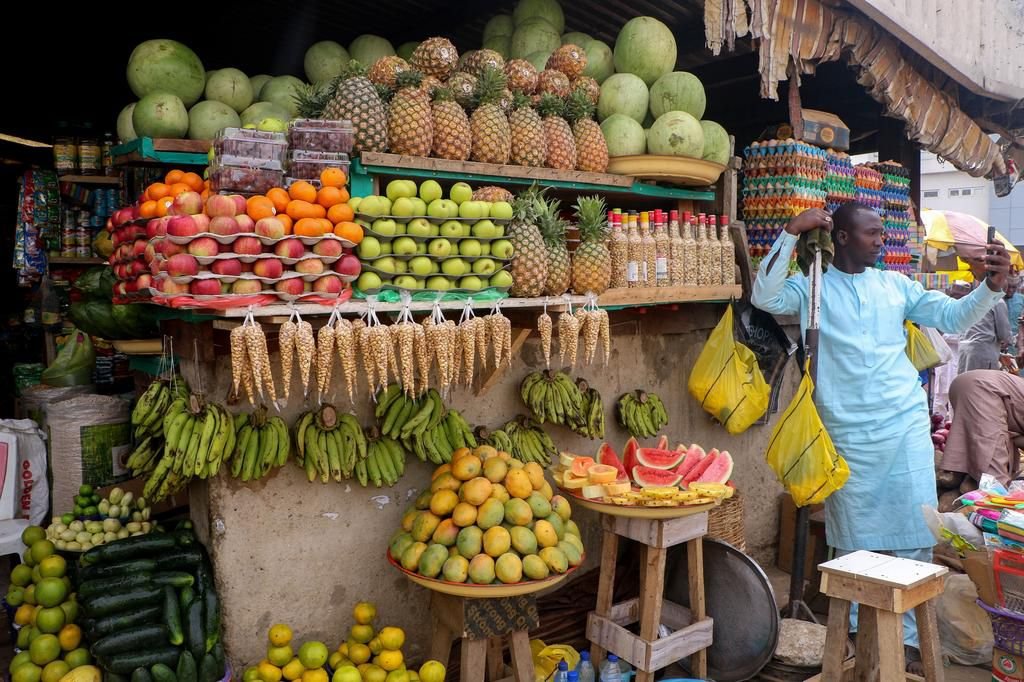
Tackling Food Scarcity: Minister Urges Adoption of Tech Innovations

Nigeria’s Minister of Agriculture and Food Security, Senator Abubakar Kyari, has tasked farmers and agriculturists in general to consider introducing technological innovations into their farming practices to tackle food scarcity in the country.

Kyari made the call on Wednesday at the ongoing 9th Annual Conference and 68th Annual General Meeting of the Association of Deans of Agriculture in Nigerian Universities (ADAN), held in Lafia, the Nasarawa State capital.

Speaking at the event which is being held at the Federal University of Lafia and tagged ‘Transforming Agricultural Education for Sustainable Food Security and National Economic Growth’, Kyari, who was represented by the Director of the Federal Department of Agriculture Extension, Ayodele Olawumi, assured Nigerians of the Federal Government’s ongoing efforts to tackle food scarcity in the country.

Declaring the annual conference open, the minister noted that the Federal Government had initiated new agricultural innovations through the Renewed Hope Agenda, geared towards enhancing productivity among farmers, especially those in rural communities.

Kyari challenged the deans of agriculture at Nigerian universities to harmonise their curriculum in line with national policies to produce the next generation of agro professionals and innovators for sustainable food security in the country.

He stressed the importance of agriculture in achieving economic growth, maintaining that the present administration of President Bola Tinubu had prioritized the sector.

The minister, therefore, tasked all stakeholders in the agriculture sector to leverage the various policies and programmes of the federal government to address the challenges of food insecurity.

“Developing strategies to ensure food security through the promotion of training, research and innovative agricultural techniques, and enhancing agricultural entrepreneurship and job creation are some of the ways to modernise the agricultural sector of the country.

“Under President Bola Tinubu’s renewed hope agenda, we will continue to work towards ensuring that Nigerians have enough food, through digital agriculture and the various technological innovations,” he added.

Speaking on the theme, “Capacity Building and Entrepreneurship Development for Agricultural Transformation”, the keynote speaker, Professor Abu Godwin, noted that the under-funding of agricultural institutions had severely constrained the institutions from developing world-class training and research capabilities.

He lamented that many faculties of agriculture operate with obsolete equipment and have poorly maintained laboratories and inadequate demonstration farms, which creates a sharp contrast between classroom theory and the reality of modern agriculture best practices.

Professor Godwin, therefore, emphasised the need for a paradigm shift in agricultural education to address the challenges of food security and national economic growth.

Also speaking, the president of the Association of Deans of Agriculture in Nigerian Universities, Professor James Joyeoba, lamented that the current system of agriculture education in the country is faced with significant challenges, hence the need for the urgent transformation of agriculture education to empower more Nigerians, especially the youth and women, with the practical knowledge on how to enhance crop and livestock production.

The vice chancellor of the Federal University of Lafia, Professor Shehu Abdul Rahman, earlier in his welcome address, urged the participants to be innovative in sharing ideas in order to identify strategies that could help to improve agricultural production for food security and the economic development of the country.

Strange Happenings: The Day It Rained Fish in Teiran

On May 24th,2020, a strange incident occurred as a social media viral video showed fish falling from the sky like rain in Yasuj, Iran. This rare happening, which many attributed to storms or tornadoes, involves fish falling during rainfall. Similar occurrences of animals raining down have been reported globally, including snakes.

https://www.facebook.com/share/r/193KnBS4av

Numerous videos are going viral on social media, capturing the extraordinary sight of fish raining from the sky in Yasuj, a city in western Iran. These clips depict fish falling onto the ground, as well as one showing a man catching fish as he witnesses this rare event. Although fish rain isn’t a new phenomenon, it’s still fascinating to understand how it happens. 

Source: www.economictimes.indiatimes.com

UNICEF Tasks Bauchi Youths on Tree Planting

The United Nations Children’s Fund, Bauchi Field Office, has renewed its commitment towards imbibing tree planting culture among the younger generation in the state.

The Chief of UNICEF Bauchi Field Office, Nuzhat Rafique, made this known during a tree planting campaign to mark World Environment Day 2025 at the College of Education Technical Dass on Thursday.

Rafique, who stressed the importance of involving youths in environmental sustainability, noted that they are the leaders of tomorrow and needed a safe and healthy planet to inherit.

“Our land is our future. So are the generations our future. They need to be restored,” she said, emphasising the need for the youth to be actively engaged in tree planting and environmental conservation.

According to Rafique, “Climate change poses a significant threat to children and the environment, and it is essential to involve youth and communities in sustainability efforts.

“Youth are the pillars of communities and nations.

“If youths are involved, everything will go well. They are the energy of the future, and they must be well-aware, engaged, and on the right path to reach their full potential.”

She added that the UNICEF works with youths through various engagements, including WASH activities and climate change initiatives, to promote environmental sustainability and tree planting culture among young people.

Rafique further stressed the need for continuous tree planting and environmental conservation efforts, saying, “We want youth and communities to grow plants every day, and that should continue for years to come.”

Also speaking, the Chairman Dass Local Government Council, Mohammad Jibo, who acknowledged the support of UNICEF, RUWASA, and ACRESAL on the campaign.

He noted that the campaign marked a significant milestone in the community’s efforts to promote environmental conservation.

Jibo maintained his dedication to environmental conservation, saying, “We must work together to protect our environment and ensure a livable future for generations to come.

“I commend the efforts of Dass College of Education and our development partners for organising this initiative,” he concluded.

Nigerian Firm Unveils $5bn Cooperative Trust Fund to Boost Agriculture Investment

As part of measures towards boosting Agriculture, a $5 billion Assured Invest Cooperative Trust Fund has been launched by a company known as Mechanized Agricultural Investment and Services (MAIS) Limited to “unlock the full economic potential of our people, farmlands, small businesses, and national future”.

The fund is described as one of the most transformative financial vehicles ever created for the cooperative sector in Africa.

While speaking at the launch in Abuja over the weekend, Chief Vision Officer, MAIS, Mr. Benjamin Aduli, said the fund remained,“A bold declaration that cooperative capital—when properly structured, transparently governed, and purposefully deployed can unlock the full economic potential of our people, our farmlands, our small businesses, and our national future.”

He observed that for decades, the Nigerian cooperative system had been treated as an afterthought—underutilised, underfinanced, and underestimated. 

He said, “Today, that era ends. With this Fund, we are shifting from marginalisation to mobilisation.”

He said the fund was particularly historic given that it is demand-driven.

“Unlike traditional financing models that are supply-driven—flooding the market with unsolicited capital, this fund responds only to verified cooperative demand – It is tailored to the real, structured needs of cooperative members—whether that’s a rice farmer in Lokoja, a housing cooperative in Enugu, an MSME cluster in Kaduna, or a youth cooperative in Abeokuta” he said.

Aduli further explained that the fund is backed by institutional capital, governed by cooperative law, not securities law, and driven by clear cooperative use-cases: food production, mechanisation, housing, education, clean energy, and digital inclusion.

He said, “It is not a public investment scheme. It is a secured cooperative financing framework, created by members, for members, and through members.

“The fund will be administered transparently with the oversight of trustee banks, insurance underwriters, and cooperative federations—including our partners.”

He listed the partners to include,

Cooperative Financing Agency of Nigeria (CFAN), National Agricultural Cooperative Organisation (NACO), Cooperative Housing Federation of Nigeria (COHFON), and Akilaah National Cooperative Federation (Akilaah).

Aduli also said the company would begin onboarding verified cooperative societies nationwide to participate in the fund subject to its terms and conditions.

He said, “We encourage federations, unions, primary cooperatives, and affiliate networks to engage with the Maistrade Ecosystem, access onboarding kits, and take advantage of this generational opportunity.Together, we are building more than a financial fund—we are building a new era of economic justice, where membership equals access and contribution guarantees returns.

“Let me thank every single partner—especially our banking allies, technology partners, and the leaders of Nigeria’s cooperative renaissance—for believing in this vision and walking this journey with us.Let history remember this day not just as a launch, but as the day Nigerian cooperatives stood up—not to beg, but to build.”

WeCreativez WhatsApp Support
Our support team is here to answer your questions. Ask us anything!
👋 Hi, how can I help?