• I Am The GYANT; Yes, We Are The GYANT!
  • Talk To The Founder : +44 7827169080

Author Archives: Admin

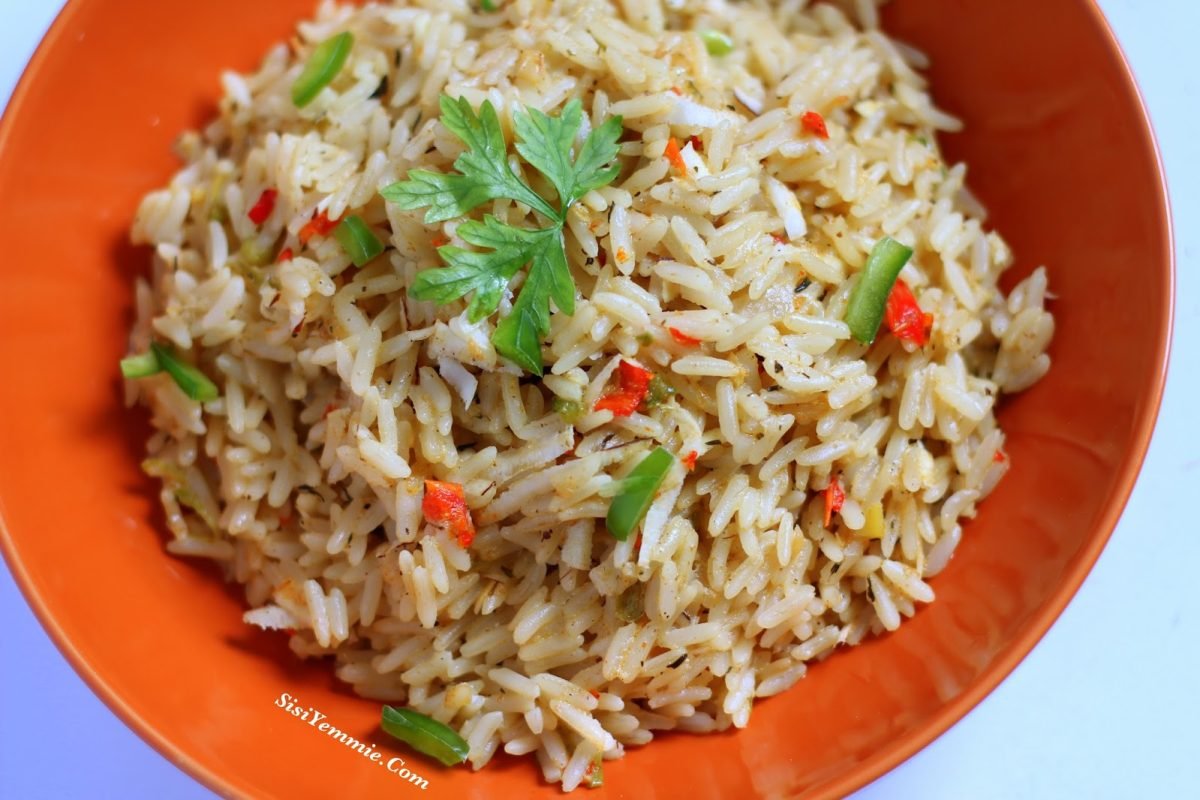
How to Make Nigerian Coconut Rice

  1. Measure your rice into a bowl, and wash thoroughly.
  2. Parboil till its half done (that is, not soft and not too hard). Drain out your rice and run it under the tap before you set it aside.
  3. In a large pan, add your tablespoons of any oil of choice, your chopped onions and sauté till it’s translucent. Add your diced scotch bonnet (Ata rodo) pepper, stir gently for the flavors to be infused well.
  4. Add your coconut milk, chicken stock, ground crayfish, chilli powder and then bring to a boil for about 10mins. Taste for seasoning and adjust if necessary. (You might or might not need to use your seasoning cube(s) and salt).
  5. Add your parboiled rice, cover the pot and allow to boil on medium heat for about 20mins or till the rice is well cooked. occasionally check if it needs extra stock and add if necessary.
  6. When the coconut rice is done, you can garnish with sliced onions, tomato etc., bay leaf, and can be served with Chicken, Goat Meat and Shrimp.
Directions To Prepare
  1. Measure your rice into a bowl and wash thoroughly.
  2. In a large pan, add your tablespoons of any oil of choice, your chopped onions and sauté till it’s translucent. Add your diced scotch bonnet (Ata rodo) pepper, stir gently for the flavours to be infused well.
  3. Add your coconut milk, chicken stock, ground crayfish, chilli powder and then bring to a boil for about 10mins. Taste for seasoning and adjust if necessary. (You might or might not need to use your seasoning cube(s) and salt).
  4. Add your basmati rice, cover the pot with foil, close with a tight lid and let it boil on low – medium heat for about 25 mins.
  5. Turn off heat, let the steam do the rest of the cooking for about 5minutes before opening the lid. Stir together, and your coconut basmati rice is ready. You can serve with Chicken, Goat Meat and Shrimp.

Flooding And The Future of Nigeria’s Food Security

Floods are synonymous with rainy seasons and can be very unpredictable. This is due to the uncertain nature of where the excess water overflow could come from. Several factors have, over the years, triggered heavy flooding in Nigeria even when the rains may not be heavy.

In Nigeria, the rainy season often brings bad news. As the rains grow heavier and more frequent, both the government and citizens are gripped by the fear of flooding. Numerous areas have already suffered from floods, with varying degrees of damage to infrastructure and tragic loss of lives.

Very recently, devastating floods have hit several agrarian regions of Nigeria, resulting in significant losses. According to the UN Office for the Coordination of Humanitarian Affairs, in 2024, flooding affected 7.5 million people across 18 countries in West and Central Africa. Chad was the hardest hit, with 1.9 million people affected, followed by Niger (1.5 million), Nigeria (1.3 million), and DR Congo (1.2 million).

Haruna Markus is a farmer based in Mokwa, in Niger State, Nigeria, and recounted his losses after a bridge collapsed .” I have a vegetable farm where I survive after being retrenched from my previous job. This particular farm provides me with tomatoes, peppers, and various vegetable crops. I couldn’t go close to the raging flood when I saw it sweep across my farmland at high speed.

“I only prayed in my heart that when it flows away into the river that something should be left for me to feed my family with. This did not happen. As I speak, my farm is like a football field as I just planted again, but still afraid the floods will come again. We need the government to help us.”

Another respondent, Alhaji Gambo, who supplies yams to Ibadan, Lagos, and other cities in Nigeria, lamented the huge loss from the flood.

‘ A night before the unfortunate incident, a truck had arrived from Jebba to convey some orders for me to Lagos. I had just escorted him to a welder who helped him fix up a damaged part of his truck. The next day, we woke up to see our storage farm overtaken by flood, and not a single yam was seen either floating or heaped. I can’t imagine how I feel right now. This situation applies to most of my friends, too.
“Government should please come to our aid as farmers because some of us will be forced to sell at excessive prices to cover up some loss,” he concluded.

By July 2025, approximately 129,000 people had been impacted by floods in the Central African Republic, the Congo, Nigeria, DR Congo, and Ghana.

These floods have severely disrupted livelihoods and basic social services. In Nigeria and the Central African Republic alone, at least 5,300 houses have been destroyed or damaged, 3,800 of which are in Nigeria. Over 5,300 hectares of farmland have also been affected, posing serious threats to food security.

Since the onset of flooding this year, at least 361 people have died, while up to 600 people, especially farmers and families, remain unaccounted for following deadly floods that swept through Mokwa, Niger State, last month.

According to the latest UN Global Assessment Report on Disaster Risk Reduction,  “disaster costs now exceed $2.3 trillion annually when cascading and ecosystem costs are taken into account.”

NiMET recently warned that Sokoto State faces a high risk of flash floods. Other states with notable risk are Kaduna, Zamfara, Yobe, Bauchi, Bayelsa, Jigawa, Adamawa, Taraba, Niger, Nasarawa, Benue, Ogun, Ondo, Lagos, Delta, Edo, Cross River, Rivers, and Akwa Ibom.

Residents in these states have been advised to evacuate, if necessary, clear drainage systems, prepare emergency kits, turn off electricity and gas during floods, strengthen mudslide prevention measures, and promote community awareness. Children should be kept at home whenever flooding is observed along their routes to school.

Despite collecting over N620 billion in ecological funds over 14 years to support environmental sustainability and disaster management, states have failed to protect their communities from the ravages of flooding.

A June 2025 report by SBM Intelligence revealed that since July 2024, floods have inundated 31 of Nigeria’s 36 states, affecting roughly 1.2 million people. The deluge has destroyed an estimated 180,000 hectares of cultivated farmland, delivering a severe blow to the country’s agricultural productivity.

Policy lapses have worsened the problem, particularly concerning the yearly release of excess water from dams within Nigeria and the Lagdo Dam in Cameroon.

Overflows from dams remain a critical issue, alongside ongoing challenges of coastal erosion and flooding.

Agreements to construct mid-level dams to contain excess water from the Lagdo Dam have yet to be implemented.

The Federal Government, through the National Emergency Management Agency and state emergency management agencies, must brace up for the upcoming floods to prevent further loss of lives and property in 2025 and beyond. Flooding is a seasonal challenge that demands proactive planning by governments and their agencies.

Relief centres should be established for those displaced by flooding, with clear plans to return them to their homes as quickly and safely as possible.

While many residents of low-lying areas may resist evacuation, government and aid agencies must take necessary interventionist measures to save lives.

Nigeria must build resilience with support from willing development partners to significantly mitigate flooding. Town planning and proper drainage control are essential for creating liveable built-up environments.

States like Lagos have long struggled with violations of setback regulations meant to protect drainage systems.

State and local governments have a duty to Nigerians to ensure regular environmental sanitation and promote proper refuse disposal by citizens.

Observers say the future of the agricultural sector in its fight towards attaining food security may be dealt a great blow if measures are not put in place against flooding.

Food Security: National Agricultural Development Fund Launches N19.5billion AgGrow Support

Towards implementing the ₦19.5 billion AgGrow Farm Support Programme, the National Agricultural Development Fund (NADF) has officially launched a digital Monitoring and Evaluation (M&E) platform.

According to information released on its website, this scheme is designed to support smallholder farmers across Nigeria by providing essential farming inputs and linking them directly to agricultural processors.

The scheme, which was established by the National Agricultural Development Fund (Establishment) Act 2022 (Act No. 34, 2022),was created by the Federal Government to address the persistent challenge of agricultural financing and to strengthen Nigeria’s food systems. The fund is now rolling out one of its most ambitious initiatives yet, AgGrow, a national farmer support program targeting 50,000 smallholder farmers across the country’s six geopolitical zones.

Further details show that under the AgGrow scheme, farmers in the maize, rice, cassava, and soybean value chains will receive:50% subsidy on seeds, fertilizers, and crop protection products (CPPs),financing of inputs, with repayments of only 50% required from processors after harvest

This means smallholder farmers can produce more without the heavy financial burden of input costs, while processors get direct access to quality produce, cutting out expensive middlemen.

“To ensure efficiency and transparency, NADF has introduced a digital Monitoring and Evaluation platform. This technology will track every seed and input from distribution to on-farm usage, every naira invested in the scheme, real-time results to help fine-tune support and improve agricultural outcomes.Participating farmers will also be:registered using a BVN or National Identity Number

“Geo-tagged and biometrically verified subject to weekly reporting, third-party audits, and strict monitoring to prevent misuse. This data-driven approach ensures accountability and strengthens the credibility of the program across stakeholders in the agricultural value chain.NADF has emphasized that inclusivity is central to the AgGrow program. Of the 50,000 farmers expected to benefit:”

“40% will be women, 20% will be youth. This focus on gender and youth participation supports broader national goals for inclusive growth, employment, and empowerment in rural communities.AgGrow is built around structured outgrower arrangements that directly connect farmers to agro-processors. 

“By removing the need for middlemen, the program aims to: improve access to markets for farmers, reduce post-harvest losses, strengthen local raw material sourcing for Nigeria’s growing agro-processing sector, processors, who will repay part of the input costs post-harvest, also benefit by securing a steady supply of raw materials, further enhancing food security and industrial productivity.

Details from the website further revealed that farmers who want to benefit from the AgGrow support scheme must visit the official NADF website to learn more and begin the registration process:at  www.nadf.gov.ng

The AgGrow program is a significant step toward transforming Nigeria’s agricultural landscape. For farmers, agripreneurs, agro-processors, and stakeholders across Africa watching Nigeria’s agricultural reforms, this initiative offers a powerful example of how targeted support and technology can drive inclusive and sustainable growth in the food sector.

UK Slams 25 Targets Involved in Alleged Smuggling of People 

The United Kingdom has sanctioned 25 targets who are allegedly involved in smuggling of people, under a new financial sanctions’ regime targeting those facilitating the travel of refugees and migrants across the English Channel via small boats. The individuals and entities targeted on Wednesday include a small boat supplier in Asia and gang leaders based in the Balkans and North Africa. “Middlemen” putting cash through the hawala money transfer system in the Middle East, which is used in payments linked to Channel crossings, are also targeted.

It is unclear how effective the new sanctions regime will be, since British authorities can only freeze assets that are in the UK, and most of the smugglers are based elsewhere. Foreign Secretary David Lammy said on Wednesday that it was a “landmark moment in the government’s work to tackle organized immigration crime [and] reduce irregular migration to the UK”.“From Europe to Asia, we are taking the fight to the people smugglers who enable irregular migration, targeting them wherever they are in the world and making them pay for their actions,” he added. The move follows legislation being introduced under the Border Security, Asylum and Immigration Bill to ramp up enforcement powers for police forces and partners to investigate and prosecute people smugglers. As part of the new sanctions regime, which was introduced two days ago, the government can now freeze assets, impose travel bans and block access to the country’s financial system for individuals and entities involved in enabling irregular migration, without relying on criminal or counterterrorism laws.

Credit =Aljazeera

National Mango Day (July 22 in Agriculture History)

1376 According to legend, the Pied Piper got rid of all the rats in the German town of Hamelin. When the townspeople refused to pay, the Pied Piper led all the towns children away.  This is the date given by Richard Rowland Verstegan in 1605 – the earliest version in English.  In ‘The Anatomy of Melancholy’ (1621) Robert Burton gives the date as June 20, 1484.  Other dates range back to 1284 AD.

1461 Charles VII of France was born. His mistress, Agnes Sorel, was a celebrated cook who created several dishes, and had several culinary creations named in her honor.  (Agnes Sorel soup garnish, Agnes Sorel Timbales, etc.).

1796 The city of Cleveland, Ohio was founded by General Moses Cleaveland of the Connecticut Land Company. The original spelling of Cleaveland was changed in 1831 when the ‘Cleveland Advertiser’ dropped the first “a” in the name to reduce the length of the newspaper’s masthead.

1822 Gregor (Johann) Mendel was born. Mendel was an Austrian botanist whose work was the foundation of the science of genetics. Working mainly with garden peas (some 28,000 plants over 7 years), he discovered what was to become know as the laws of heredity.

1915 Sir Sanford Fleming died. He devised the present system of time zones while working for the Canadian Pacific Railway.

1926 Dorcas Bates Reilly was born (died Oct 15, 2018).  As Campbell’s test kitchen supervisor, she created the classic Green Bean Casserole.  She also made hundreds of recipes throughout her career.

1942 Gasoline rationing with coupons began on the Atlantic coast of the U.S.

1952 Frank L. Zybach of Strasburg, Colorado received U.S. patent No. 2,604,359 for a  “Self-Propelled Sprinkling Irrigating Apparatus.”  This is the now familiar center-pivoting system that waters large circles of crops.

1956 Curnonsky (Maurice Edmond Sailland) died. At the age of 84, he leaned too far out of his window and fell to his death. French writer, novelist, biographer, and gastronome. Curnonsky was known as the “Prince of Gastronomes,” a title he was awarded in a public referendum in 1927, and a title no one else has ever been given.

CREDIT – www.foodreference.com

WeCreativez WhatsApp Support
Our support team is here to answer your questions. Ask us anything!
👋 Hi, how can I help?